3D Work / SaaS
3D PriceTag
A 3D printing pricing calculator for Etsy sellers and makers, working out material, electricity, labour, marketplace fees and profit on web and Android.
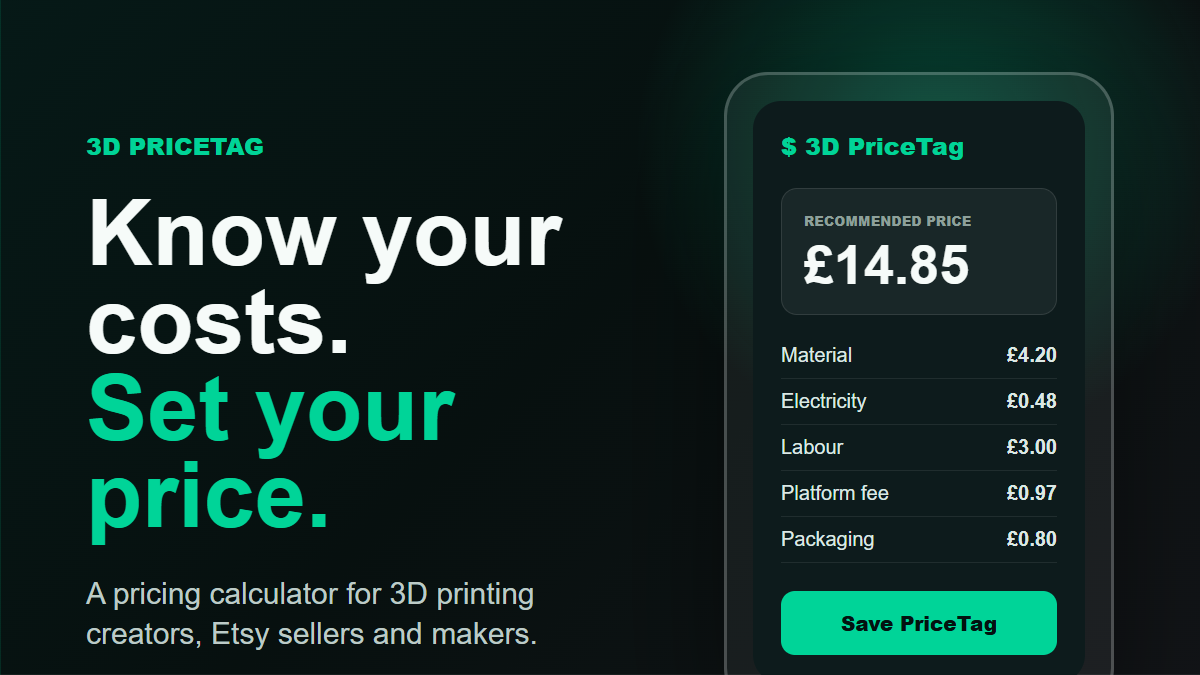
3D PriceTag is a 3D printing pricing calculator built for Etsy sellers, small print businesses and hobby makers who sell what they print. I built it to fix a problem I kept running into myself: most people printing to sell know their filament cost, but very few know what a finished order actually costs once everything else is added in.
The problem
Pricing a 3D print properly is a lot more than material plus a bit on top. A real order carries filament, electricity, machine time, labour, marketplace fees, packaging, failed prints, wear and maintenance, VAT and the profit you actually want to keep. Leave one of those out and a product that looks like a winner can quietly lose you money on every sale. Most makers end up guessing, copying a competitor's price, or working it out in a messy spreadsheet that never quite gets updated.
I wanted to turn that whole calculation into something quick enough to use on every listing, but honest enough that you can trust the number at the end.
What I built
- A web-based 3D printing price calculator you can use on a desktop or workshop laptop.
- An Android app so you can price a print at the bench or at a craft fair, not just when you are sat at a computer.
- Quick and Advanced modes, so a fast job takes seconds and a detailed quote can account for everything.
- Saved PriceTags, where each quote becomes a record of the exact figures you used at the time.
- Built-in marketplace fee handling for Etsy, eBay, Amazon and Shopify, so platform cuts are part of the price rather than a nasty surprise.
- Proper markup versus margin handling, because plenty of sellers mix the two up and undercharge without realising.
- Multi-currency support for makers selling outside the UK.
Product thinking
The big decision early on was to not make it feel like another spreadsheet. Quick Mode keeps the first pass light: material used, filament cost, print time and the markup you want. Advanced Mode opens up the deeper business costs when accuracy really matters, including labour, platform fees, VAT, packaging, waste allowance, depreciation and rounding.
That split is deliberate. A hobby seller who just wants a fair price gets an answer in seconds, and someone running a proper print business gets enough detail to price repeat products, custom commissions and marketplace listings with confidence.
Why it matters
3D printed products look cheap to make because the material on show is only a small part of the story. The hidden costs are where the risk lives, and they are exactly the ones people forget. A tool like 3D PriceTag turns pricing into a repeatable system instead of a guess: work out the true cost, choose the profit you want, see what the fees do to it, then set a price you are happy with.
For me it ties a lot of my work together: running 3D Print Land, understanding ecommerce margins day to day, and building practical software around real problems rather than ideas on paper.
Current platform
3D PriceTag is live on the web and Android, with iOS on the way. The wider app includes a dashboard, saved PriceTags, printer and filament profiles, presets, exports and cloud sync, so your pricing follows you across devices.